 Save to Pinterest
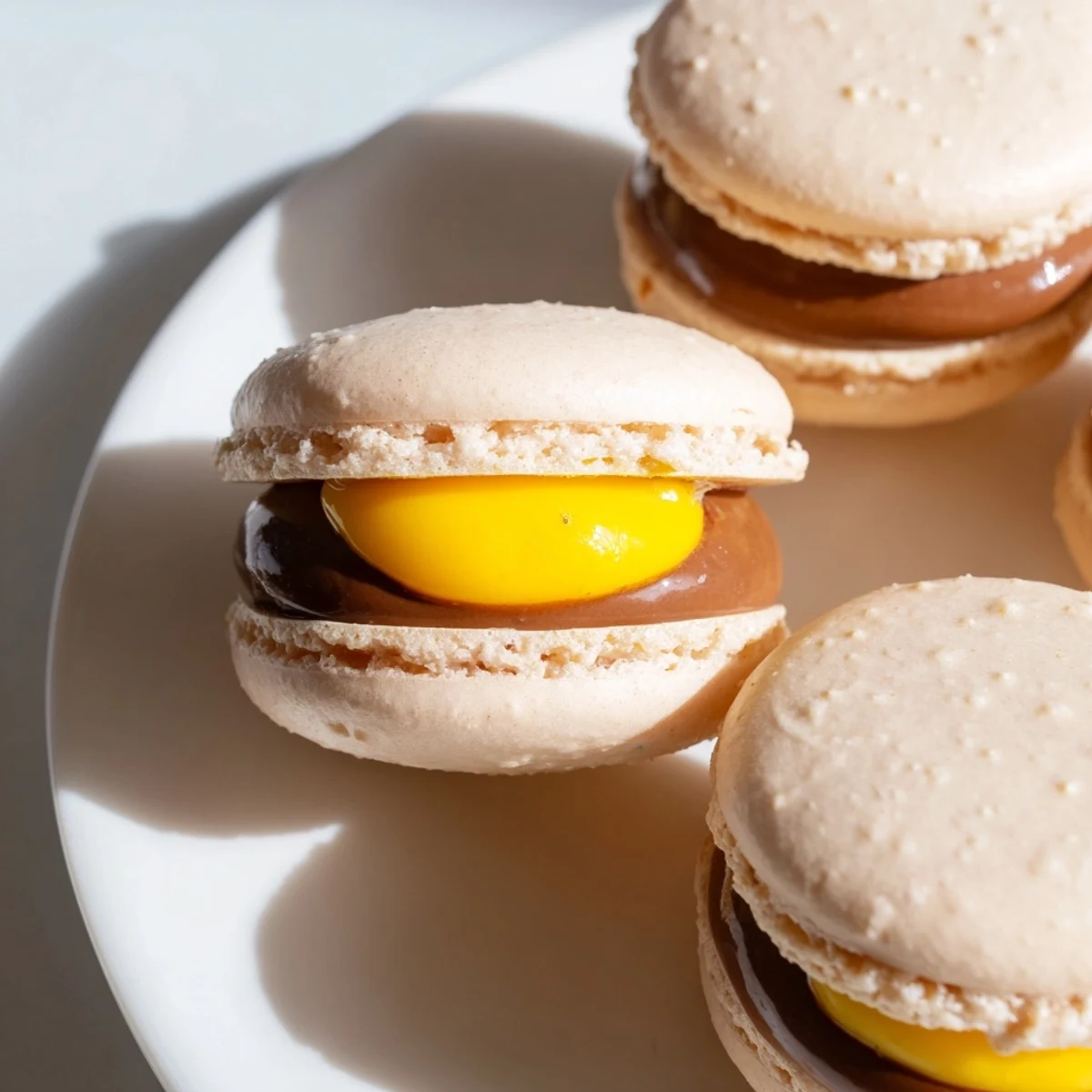
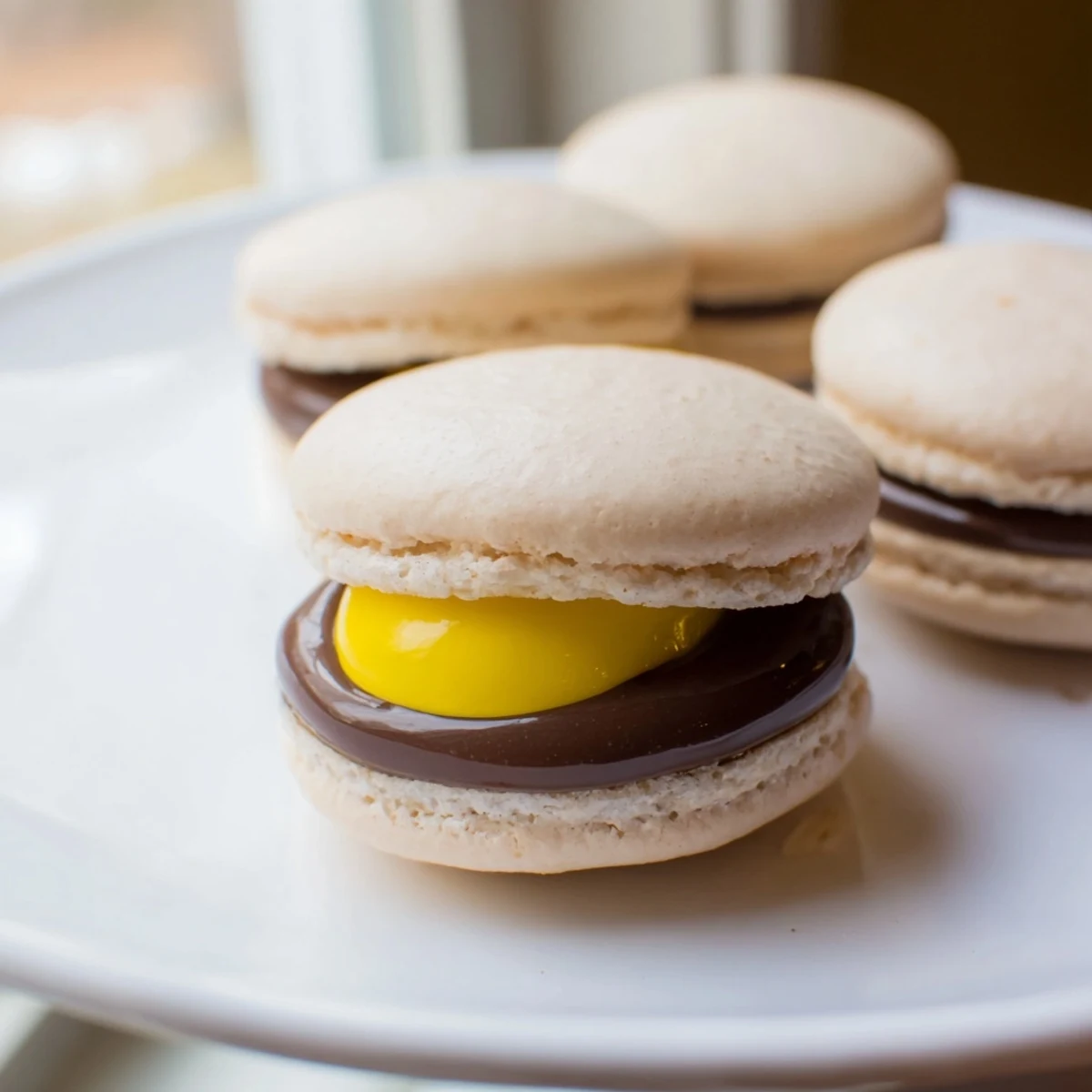
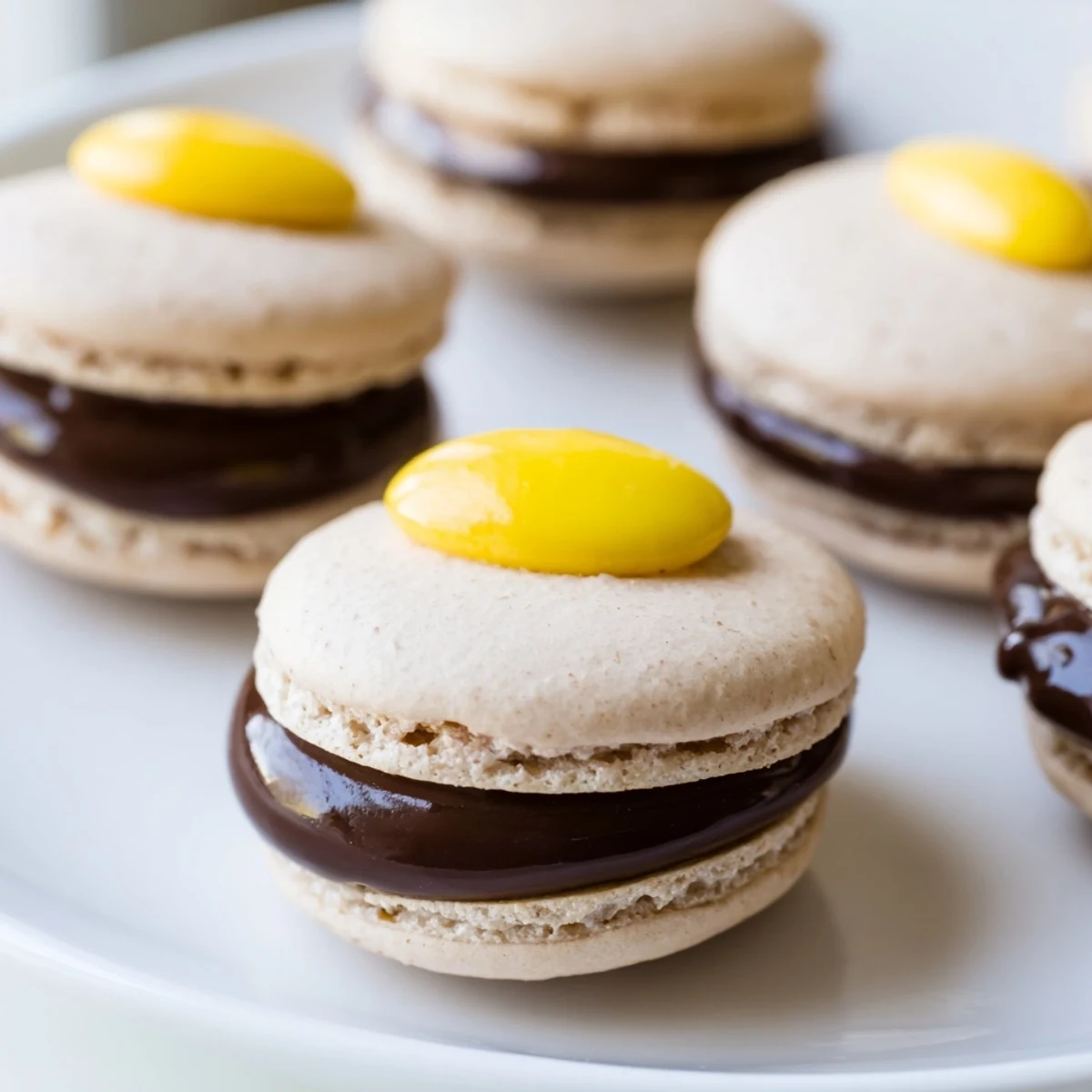
 These elegant French confections feature crisp almond meringue shells paired with a luscious milk chocolate ganache filling inspired by the iconic Cadbury Creme Egg. Each delicate macaron showcases a ring of glossy chocolate surrounding a vibrant yellow "yolk" center, creating a stunning visual tribute to the beloved Easter treat.
The process involves creating a stable French meringue, carefully folding it with sifted almond flour and powdered sugar to achieve the perfect ribbon-like consistency, then piping and resting the shells before baking to achieve those signature smooth tops and ruffled "feet." The creamy filling combines melted milk chocolate with rich heavy cream and golden syrup, then portioned and tinted to replicate the classic egg yolk effect.
While the technique requires patience and precision, the result is an impressive showstopper that combines sophisticated French pastry techniques with nostalgic Easter flavors. Best enjoyed after 24 hours of resting, allowing the shells to soften slightly and the flavors to meld beautifully.
The first Easter I attempted macarons, my kitchen looked like a pastel explosion and my confidence was hanging by a thread. But that first bite, with the crisp shell giving way to that impossibly creamy center, made every failed batch worth it. Now they are the one thing my actually requests months in advance, and I have learned to embrace the finicky process.
Last year I made these for my nieces Easter brunch and watched her face light up when she bit into that surprise yellow center. She immediately declared them better than the actual chocolate eggs, which might just be the highest compliment I have ever received in the kitchen.
Ingredients
- Almond flour: Using finely ground almond flour is essential because any coarse pieces will create lumpy shells with those dreaded cracks
- Powdered sugar: This ingredient is not just for sweetness but helps create that signature smooth shell texture
- Egg whites: Room temperature egg whites whip up better and create more stable meringue for your shells
- Granulated sugar: The sugar stabilizes your meringue and helps create those coveted feet
- Cream of tartar: This is your insurance policy for stiff glossy peaks that will not collapse
- Food coloring: Gel colors work best because they will not water down your delicate batter
- Milk chocolate: Using high quality chocolate makes all the difference in that creamy fondant style filling
- Heavy cream: This creates that silky ganache texture we are aiming for
- Golden syrup: This is the secret ingredient that gives the filling that unmistakable Cadbury fondant consistency
- Unsalted butter: Room temperature butter blends perfectly into the filling for ultimate smoothness
- Yellow gel coloring: Just a tiny drop creates that convincing egg yolk center
Instructions
- Prep your workspace:
- Line your baking sheets with either parchment paper or a silicone mat and fit your pastry bag with a round tip
- Sift the dry ingredients:
- Sift almond flour and powdered sugar together to ensure no lumps remain in your batter
- Whip the meringue:
- Whisk egg whites with cream of tartar until soft peaks form, then gradually beat in granulated sugar until you have stiff glossy peaks
- Make the batter:
- Fold the almond mixture into the meringue in three additions until the batter flows like thick ribbons when you lift the spatula
- Color your batter:
- Tint a third of the batter yellow if you want that playful yolk effect in your finished cookies
- Pipe the shells:
- Transfer batter to your pastry bag and pipe 32 rounds onto the prepared sheets, then tap firmly to release any trapped air
- Rest the shells:
- Let the piped shells sit at room temperature for 30 to 60 minutes until they are dry to the touch and form a skin
- Bake to perfection:
- Bake at 150°C (300°F) for 13 to 15 minutes, rotating halfway through, until the shells easily lift from the mat
- Make the filling:
- Heat cream until just simmering, pour over chopped chocolate, let sit for 2 minutes, then stir until smooth and glossy
- Finish the filling:
- Stir in the golden syrup and butter until combined, then tint a quarter of the filling with yellow coloring and chill both portions
- Assemble your creation:
- Pipe a ring of chocolate filling onto one shell, add a dot of yellow filling in the center, and sandwich with another shell
- Let them mature:
- Store the assembled macarons in an airtight container overnight for the flavors to develop and the texture to soften
 Save to Pinterest
 These cookies have become my signature contribution to family gatherings, and watching people discover that surprise yellow center never gets old. There is something magical about biting through that crisp shell into that soft creamy middle.
Getting The Right Consistency
The batter should flow like lava when you lift your spatula and disappear back into itself within about 20 seconds. I have learned the hard way that under mixing will leave you with hollow shells while over mixing creates flat cookies that refuse to rise.
Perfecting The Filling
The golden syrup is what transforms this from a standard chocolate ganache into that authentic fondant style filling we all know and love. Make sure both portions of the filling are chilled but still pipeable for the neatest assembly.
Storage And Serving
Macarons actually improve with age so do not rush to serve them immediately. That overnight rest in the refrigerator lets the flavors meld and the shells soften slightly for that perfect texture.
- Bring them to room temperature 30 minutes before serving for the best eating experience
- They can be frozen for up to 3 months if you want to get a head start on holiday baking
- The unfilled shells keep for a week in an airtight container if you want to bake ahead
 Save to Pinterest
 There is something deeply satisfying about mastering a recipe that intimidates so many home bakers, and these Easter treats are worth every moment of effort.
Recipe FAQs
- → Why must macaron shells rest before baking?
-
Letting piped shells rest for 30-60 minutes forms a dry skin on the surface. This crucial step ensures proper oven spring, creates those signature ruffled feet, and prevents cracking during baking by allowing steam to escape gradually.
- → Can I use dark chocolate instead of milk chocolate?
-
Absolutely. Dark chocolate creates a richer, less sweet filling that contrasts beautifully with the sweet almond shells. Adjust the cream ratio slightly if needed—dark chocolate typically requires less liquid than milk varieties.
- → How do I know when I've achieved proper macaronage?
-
The batter is ready when it flows slowly in thick ribbons from your spatula and the ribbons disappear back into the batter within 30 seconds. Over-mixing will cause flat, spread shells while under-mixing results in lumpy, cracked surfaces.
- → Why do my macarons crack in the oven?
-
Cracking typically occurs from shells that didn't rest long enough, oven temperature too high, or excessive air bubbles in the batter. Ensure surfaces are completely dry to touch before baking and tap pans firmly to release trapped air.
- → How should I store assembled macarons?
-
Store in an airtight container in the refrigerator for up to 5 days. For optimal texture and flavor, let them mature at room temperature for 24 hours before serving—this allows the filling to soften the shells slightly and flavors to develop fully.
- → Can I make the components ahead of time?
-
Both shells and filling can be prepared 1-2 days in advance. Store shells at room temperature in a dry container. Keep the filling refrigerated and bring to room temperature before assembling for easy piping.